
I managed to finish 2025 with even less games completed than before. Which is an absolute disappointment in my part, but what I have experienced were a couple of bangers including one that recently won Game of the Year and a couple that achieved acclaim when they were first released. We also have our first Nintendo Switch 2 experience as well as a new bunch of classic games to round-off the year.
While I am happy with what I have achieved, I definitely could have played and finished a lot more. So for 2026 I hope to achieve just that but it’s all about striking a balance between work, anime, games and life in general.
The Video Games I Played series compiles my thoughts about each game that I’ve written over on Anime UK News and stored them here on my blog. Like before, they were essentially a collection of what I liked/disliked for each one, and some will have more to say than others but that’s because of the huge scope of the experience. They’re lengthy write-ups which is why I split the post into two parts.
Part 1 will cover the first 9 games I completed between January to June, as well as a glimpse of an upcoming game that’s due to be released in early 2026.
Alan Wake Remastered (+ the Expansions)
The first game of the year is a revisit to a cult classic psychological thriller released back in 2010 for the Xbox 360. Developed by Remedy, the folks behind Max Payne and Control, Alan Wake was a very interesting and different experience with a concept that sounded like it came from a Kingdom Hearts game but placed in a Deadly Premonition/Twin Peaks style scenario.
A few years ago, Remedy remastered Alan Wake for modern platforms and in preparation for my playthroughs for both Control and Alan Wake II, I wanted to return to the world of Bright Falls with this new release. I played the original on Xbox 360 when it first came out and got all of the achievements including its two expansions; The Signal and The Writer, both continuing the story. For this revisit I also aimed to achieve all of the trophies which I managed to do and it was once again a really fun time going back to the game and seeing it with new improvements.
Looking back at comparison videos, there’s a lot of changes applied to this remaster. The character models have been upgraded, with Alan Wake’s look more consistent for Alan Wake II, and the gameplay is still as good as the original with better performance. The remaster presents the game at 4K resolution with 60 frames per second for the most part, as the cutscenes remain at 30 which I’m perfectly fine with to capture that cinematic look however there were a number of occasions where these segments are pretty choppy and stutter so it’s possible the rendering wasn’t perfect for the PlayStation 5 version. Outside of that, it’s an otherwise really good remaster and holds up very well.
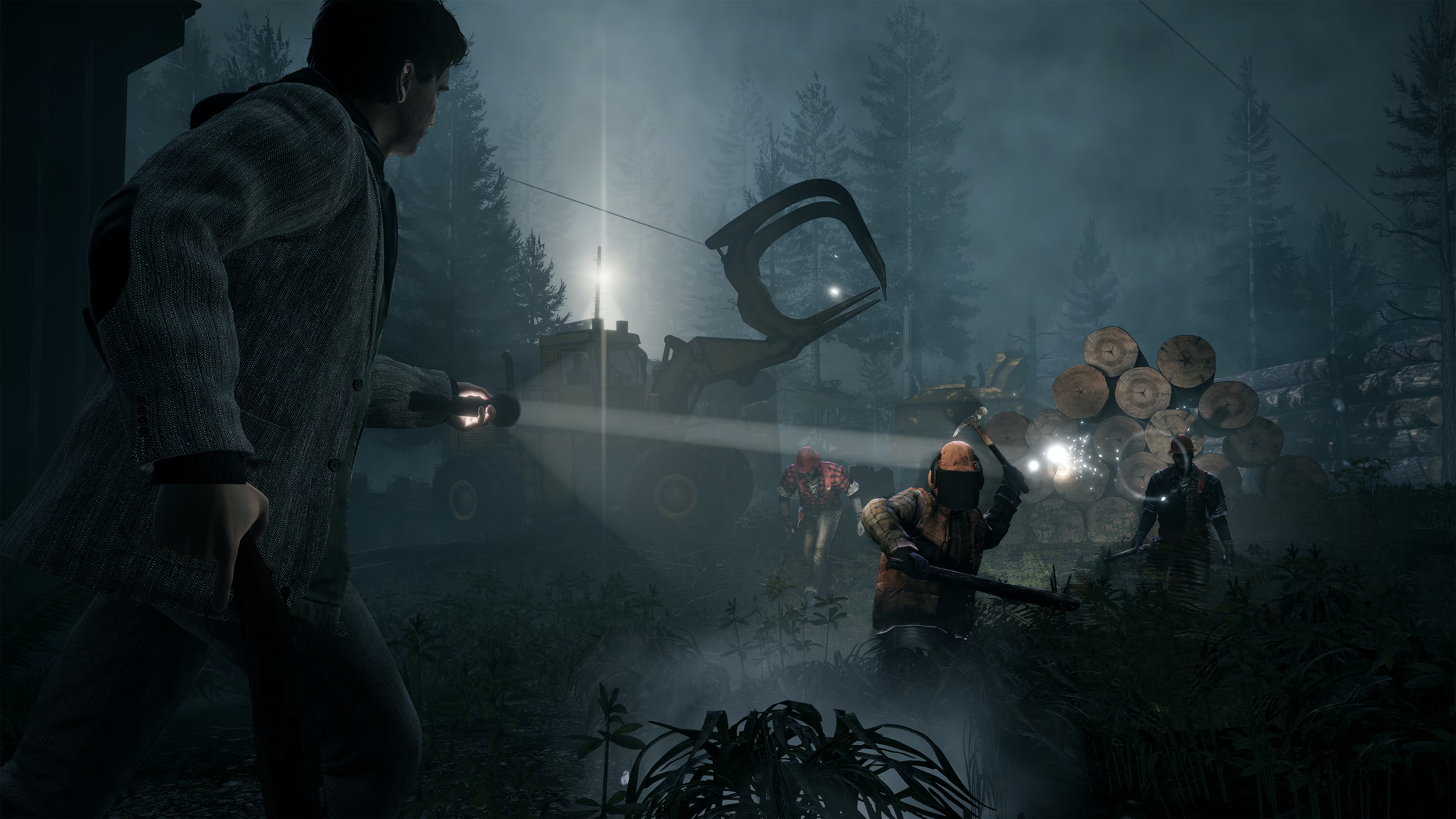
Alan Wake‘s gameplay was really interesting because of how it handled the situations Alan lands himself in. You need to use your flashlight to remove the shield that each Taken, the enemies of the game, have on them in order to be able to take them out with your weapons. This is a third-person shooter as well with no melee mechanics but you can utilise flashguns, flash grenades and a flare to protect yourself in situations where you want to run away or feel overwhelmed by everything around you. The Taken are afraid of the light so its your job to make use of that to not only defeat them but to progress through the game. I love the choice you can make in combat to which you can decide if you wish to fight the Taken in the moment or run away to the next destination so that you can preserve the ammo and weapons for the next encounter.
Outside of Taken you also have poltergeist type enemies who will try to fling themselves onto you and you want to destroy them to avoid awkward scenarios where you could easily end up being trapped because running away doesn’t always work in many situations. There are also birds who appear in flocks that want to dive into you just to be a pain. The Taken enemies in general have a distorted sound effect that sounds great to enhance their possessed voices and they say random stuff that can sound comical at times but fits with the character that they used to be.
The story for Alan Wake is divided into episodes to resemble a television series, with our main lead being a novelist inspired by many thriller book writers so there’s references and tones that resemble other mediums including Twin Peaks that I had mentioned. The voice actor for Max Payne also makes an appearance which is a nice nod to those games. When you start the next episode you also get a recap of what happened in the previous episode, a great way to help those who took a break from playing the game.
Three difficulty modes are available; Easy, Normal and Nightmare. Now this I would argue is actually a typo. In the original Xbox 360 release, the difficulty modes were Normal, Hard and Nightmare and even the trophy list resembles that so what I did was play through the game on Normal mode which was actually Hard mode, followed by a new playthrough on Nightmare. The two modes are pretty much the same except Alan will take more damage and the enemies will take a bit longer to take down for both flashing the light against them but also shooting them. For newcomers you want to stick to Easy but if you played the original version, Normal mode is good.
In terms of flaws for the actual game, I do think some parts throughout have too much padding just to make the episode feel long but there were great moments throughout. The platforming was also not particularly great but thankfully it’s only in small portions of the game, especially with The Writer expansion. Outside of that, as mentioned earlier, the technical issues with the cutscenes for the remaster did feel jarring.
Now let’s talk briefly about the expansions; The Signal and The Writer. Both of these were fairly short, about an hour each, that continued the events of the previous game and while they do provide some more context, the ending overall was still a cliff-hanger of sorts so I was curious to see how Alan Wake II addresses this.
Overall, Alan Wake Remastered was still a great time and had a blast revisiting after 15 years. Playtime was about 8-10 hours for the base game with collectibles and various trophies picked up, followed by 5-6 hours for a Nightmare playthrough and another 2-3 hours going through The Signal and The Writer with all of its trophies. I had to re-attempt The Writer numerous times to get that trophy where you need to complete the episode in one sitting without dying or restarting checkpoints because of the platforming content.
One more thing to mention is that the trophies have a few hiccups. One notable trophy is for Episode 5 where you need to survive a whole chapter without dying and while I achieved this first-time on Normal mode (Hard difficulty), I didn’t get the trophy because I paused a few times. So when you attempt the game, don’t pause and you should be fine.

Control (+ the Expansions)
Keeping the Remedy universe train going, the next game I ventured through is their third-person science fiction shooter Control which was one that I had heard very little of outside of knowing it had ties to Alan Wake.
Originally released for the eighth generation of consoles before being remastered for PlayStation 5 & Xbox Series X, I picked up the physical version for PS5 at the same time as Alan Wake Remastered and wanted to revisit that gem before starting this, especially to be in the loop on the world’s lore and it was worth the trip. Control was a very fascinating game in terms of both presentation and world-building.
This game was very sci-fi and is also unique with its aesthetic. The design of each layer of content was superb, with regular hallways to big facilities. The best way to describe the look and feel of this game was that it’s basically a mix of Dredd and Half-Life together with Remedy’s classic gameplay from their previous games, because you’re basically in a building that’s on lockdown but everything inside was like an experiment gone wrong with enemies of unknown origin spawning in with just your levitating abilities and a shapeshifting gun to fight them off.
Also pretty good were the character models. They went for a realistic look that held up pretty well, though dialogue and expressions can look a bit odd from time to time. But the best part for me was how they manage to add in live-action content through the usage of lore sprinkled throughout the game. The game explains its story and context through TVs and projected imagery which were fantastic to watch and really engaging, adds another layer to the sci-fi style they were pursuing. I also really liked the cutscenes as they transition from one story mission to another.
The collectibles throughout the game also held value with really intriguing backstories and context for the employees of the Federal Bureau of Control, the game’s location, and what they have been doing dealing with the supernatural and unknown entities, whether its an object that’s possessed or bizarre beings that are trying to kill you. The side missions were optional but some had some interesting ideas, for example you encounter a person who had to constantly stare at a possessed fridge otherwise it would kill them, and another where you need to get rid of some deadly mold that tastes like sweets. But for the most part they were pretty much fetch-quests of sorts. There’s also some timed alert missions which were just ‘take out these group of people’ within a time limit and they do appear even during story missions which can be annoying, but you don’t need to worry about them.
The story starts off strong and paced pretty well, but as the story missions progress, it does land on a rather sudden end-point. It’s like building up to something huge and it decides to simplify it at the last second. In fairness it’s not as bad as it sounds because it does wrap up some key moments. The game’s lore and concepts were so interesting that I wanted to know more about what was going on, and while the expansions The Foundation and Altered World Events added to that, there’s still more that needed to be explored so the game doesn’t have any form of proper closure, but thankfully Remedy did confirm a sequel (which was later revealed to be Control Resonant) so that was a relief.
In terms of combat, this is a third-person shooter where your gun can shape-shift into different modes. It’s basically like owning different weapons but they are combined together. You can wield two types of modes at once, and these include a shotgun type, a sniper type or even a grenade launcher of sorts. They can all be upgraded and have attachments to improve its performance. You can also add more abilities for your character to improve your survival during combat. This game doesn’t have regenerative health so you’ll need to pick up energy from downed enemies to recover, which worked well but it’s basically saying you shouldn’t rush otherwise you will die a lot. You will eventually have levitation and telepathic abilities which is where the game starts to become more fun as you progress but it can be repetitive from time to time. Fortunately the combat felt fast-paced so it wasn’t a massive issue for the most part.
In terms of enemy variety they all share the same design but with different styles to make you run around more during combat and try out different approaches. For example there’s enemies that will be in the air and shooting with certain weapons wouldn’t work and telepathic abilities don’t always land. There’s also a random ball of energy that you can’t kill but they don’t appear often so it’s not a major threat.
The difficulty was challenging but doable and you can make your way through without too much issue. It was recommended that you upgrade your abilities, weapons and add-on slots as you progress otherwise you will struggle, especially considering the two expansions will pull all sorts of punches against you if you’re not strong enough.
Now let’s talk briefly about the expansions. The Foundation is a big area with some interesting ideas, though I felt the pacing was inconsistent with a fair amount of dragged out parts here and there. The new abilities were pretty cool but they only work in this new area. There’s a cool retro moment which was neat and one side mission put the emphasis on darkness to a new level which was challenging. This takes place after the events of the main game and it still doesn’t conclude the overall story.
Altered World Events is a very cool crossover with Remedy’s Alan Wake. This does take place after the events of Alan Wake‘s expansions so there will be spoilers if you’ve not played that game before, but the general idea was that this expansion introduces darkness and a deadly enemy if you don’t stay in the light. A lot of cool ideas and has a mini-game where you can fight hordes of enemies which was cool. This expansion sets up the events of Alan Wake II so I recommend playing this beforehand.
Control Ultimate Edition was a pretty solid package of interesting sci-fi concepts, great gameplay mechanics and intrigue to its lore and world-building. The main game took about 12 hours to complete its story and most of the side content, with an additional 4 hours each for the expansions. All of the trophies were picked up as they were manageable within the timeframe and the Platinum trophy. The reveal trailer was all I needed to get into this game and I recommend going into this pretty blind if I’m honest, adds more to the experience.

Alan Wake II (+ its Expansions)
The third game to play was my plan all along to continue the Remedy Connected Universe. Alan Wake was a refresher for this moment and Control provided more context to what’s to come, and now Alan Wake II was one of the most interesting and rewarding experiences I’ve had for a continuation.
Developed by Remedy and published by Epic Games, Alan Wake II shifted things around with their direction, going from a psychological thriller into a survival horror in the same vein and tone as Resident Evil. Not only do you have Alan Wake back in the nightmares, we are also introduced to a new female lead named Saga Anderson who’s a great addition to the story and lore. There’s also some funky cameos and references throughout with Sam Lake returning in video game form as Alex Casey, who is an FBI agent referencing Max Payne in both appearance and voice, as well as Shawn Ashmore returning by portraying a different character though he’s also a reference to Jack Joyce from Quantum Break. Both characters aren’t named to what they were before due to licensing and whilst Max Payne and Quantum Break are not part of the shared universe, it’s nice to see them being remembered in some shape or form.
The story is a different format to the original Alan Wake, but still keeping the episodic style. We have multiple chapters per character, one focusing on Saga Anderson first then it switches it up to Alan Wake, but you have the option to choose which one you want to focus on at any point early into the game. During the journey you will be thrown into the situation with a lot of asking questions about what is going on, but the game does reveal itself one by one. Saga Anderson’s gameplay is more on the lighter side with various dark moments throughout that put you on your knees due to the tense atmosphere, and Alan Wake’s gameplay is more on the darker scarier side whilst capturing that noir feel. I enjoyed both campaigns and found the conclusion to be pretty rewarding. It does scream for more, but New Game Plus ‘The Final Draft’ apparently provided a more conclusive end.
As mentioned, this is now a survival horror. You will be in the dark a fair amount and there’s not much ammo to come by this time around. In Alan Wake, ammo was pretty much everywhere and you could in theory breeze through the story without an issue, but here it’s a different scenario. Ammo, especially for the flashlight, was pretty scarce and the game does force you to be very careful with your actions because every bullet/light counts otherwise you’re going to struggle. Whilst I admittedly didn’t have too much of an issue for the weapons, it was the flashlight that concerned me the most. The light does not fully heal you like the original does, so you do need to be more aware of your surroundings but at least you don’t have to worry about birds this time.
In addition to the dark tone, the enemies were pretty scary in numbers so you want to be pretty prepared before you fight your way through them, and especially in Alan Wake’s story because his is more focused on stealth than action. Dying does result in a weird rag doll look to the camera but at least the checkpoints are pretty generous. There were a lot of jump scares throughout which worked but also becomes pretty tedious at times, which the characters do take notice. And the boss fights were decent, scary in its atmosphere but like Resident Evil you can just shoot your way through and survive without too much of a problem, though one particular boss fight that’s located in a bunch of water was rather annoying in its game design so I had to shoot them to death before they could even start the fight.
This game also featured some interesting gameplay mechanics. Saga Anderson has an ability called The Mind Place, which is a little room where she can go through their investigations, use the wall to note photos and figure out what is going on and how to solve the next piece of the jigsaw. You can also view profiles of people you interact to see what they were thinking in the moment, as well as any collectibles like audio, TV and music tapes. Alan Wake has a similar ability, but one where he can rewrite his drafts so that the area around him changes to allow him to progress. One thing that I also found pretty interesting was that the game does not pause in these moments for the characters, basically dialogue can still happen whilst they’re in their head and can even be killed by enemies if you’re not careful.
In terms of the presentation, I love the darker and serious tone the game was going for, whilst also bringing some comedic light to the mix, especially given the first game was inspired by Twin Peaks. There’s also fun references and cameos that I won’t spoil but it builds upon the Remedy Connected Universe. I played the game on Performance Mode and it ran really well, and the game does have Graphics and Ray Tracing modes which I didn’t bother with, so if you want the best of both modes it’s best you play the game on PC or via PlayStation 5 Pro.
The trophies in this game were surprisingly manageable. All you need to do is collect specific items in a majority of Saga Anderson’s campaign with some from Alan’s and finish the game, so I was able to get the Platinum trophy after 24 hours of playtime. I didn’t stop there because I had access to both Night Springs and The Lake House expansions thanks to the Deluxe Edition physical release which includes all of them on the disc. Both of these expansions ran for about 2-3 hours each and they share different tones. Night Springs was back to the classic campy feel that the first game had whilst also having a lot of fun and creativity to fit the Twilight Zone style. The Lake House was back to survival horror with some pretty scary and tense moments throughout due to its music and atmosphere. It also offered a really interesting story to it as well and it’s worth playing.
Overall, I had a blast playing through Alan Wake II. It’s a survival horror game with a great cast of characters, a fascinating story, solid tone and gameplay was pretty solid as a whole. I also want to mention that there were a whole bunch of live-action scenes throughout which blended super well with the game’s graphic style, and a certain chapter that went viral that I won’t spoil but it was super good.
PUNCH-LINE
In 2015, before they became famous working on dozens of projects at the same time, studio MAPPA produced an original anime series with Zero Escape creator Kotaro Uchikoshi about a guy who can accidently destroy humanity if he stares at an underwear twice in a row. It’s a bizarre concept that threw off a lot of people, but once you bypass that idea and keep going, you end up with a pretty solid story that has its own twists and turns like the visual novel games had done previously.
After the anime aired, Kotaro Uchikoshi and the folks at 5pb., the developers of the Science Adventure series, made a visual novel adaptation of the anime with extra content to help expand the story and add more bits and bobs throughout. Considering how many visual novels based on anime or manga or light novel tend to remain Japan or Asia only, UK publisher PQube picked up the rights to bring the game over to the west and I bought their first print edition release about a year after its 2018 release.
Fast-forward to 2025 and I finally played through the game. Now part of the reason why it had taken this long was because when I last played through a visual novel (Spirit Hunter: NG), my TV ended up with a screen retention i.e. potential burn-in which put me off from playing any more from the genre for a long while. Eventually I had to work my way through them and thankfully from what I have seen there were no issues so far.
PUNCH LINE‘s video game version was presented in an episodic format like an anime with its own opening and ending for each chapter. There were a mixture of anime footage and CG cutscenes throughout, with voiced dialogue for all of it which was great and the cast themselves provided solid performances. The quality of the game was fairly low budget at times with repeated character animations and expressions throughout, plus the anime cutscene moments did feel edited for moments that are presumably weren’t part of the TV series prior. But in terms of the progression it was decent for the most part.
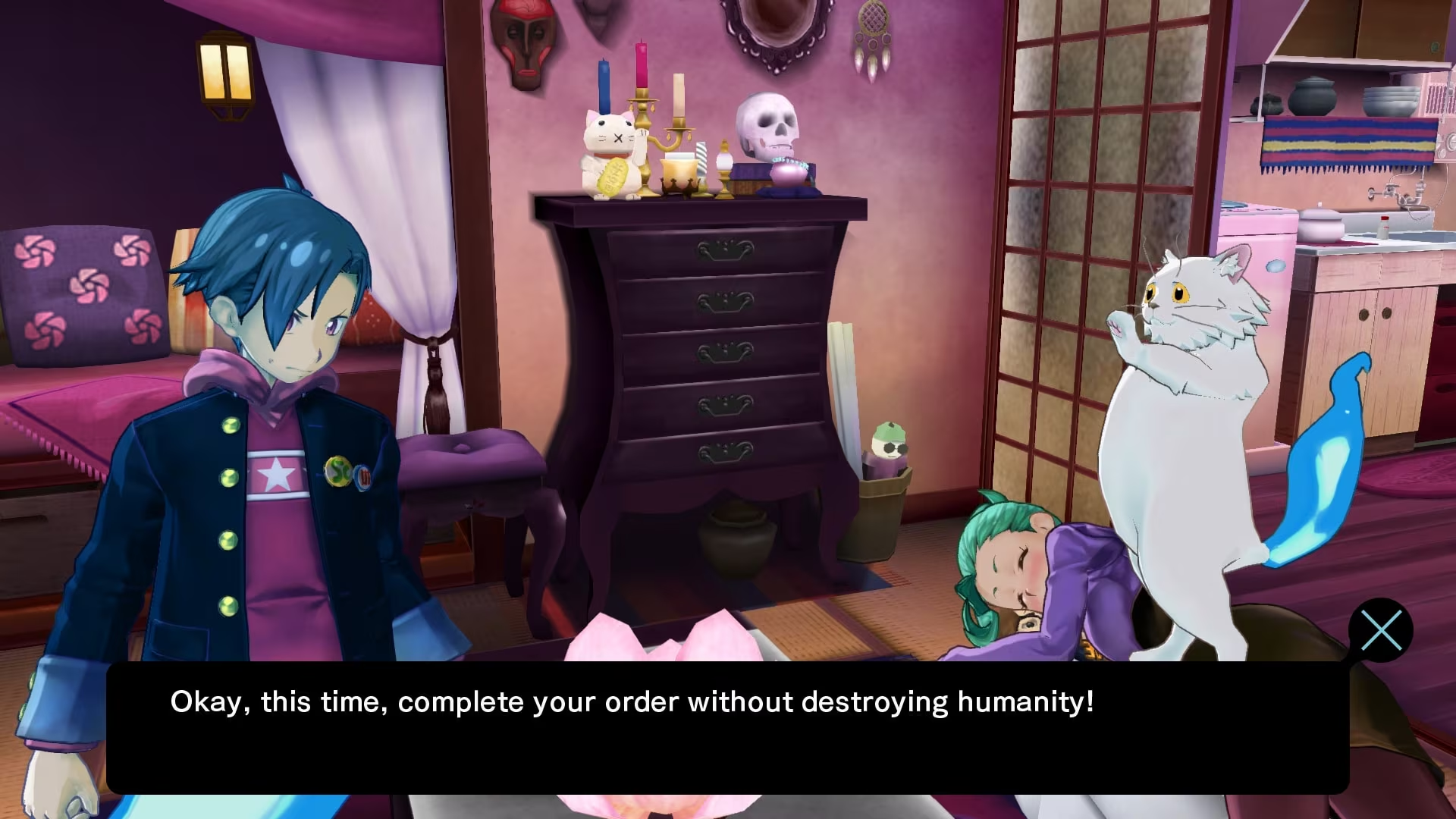
The first twelve chapters was about half of the anime’s storyline and there was a mix of story and interactive elements throughout. During the interactive segments you browse the room and have to make a choice to interact with an item to make the characters respond to that moment or create a series of interactions that produce a chain reaction in itself. Now the challenge was that if you are in the wrong position and witness their underwear, a bar will appear which upon reaching its limit will cause humanity to be doomed. That said, the game doesn’t give you any game overs, instead sends you back to the previous moment so you can continue without too much issue.
In other words, this game holds your hand a lot and there was no challenge in itself, but it’s a visual novel at the end of the day. Saying that, other visual novels do tend to punish you by sending you back to the main menu while here that was not the case. Considering how the story works I could see why the game acts the way it does and make the cat character who guides you basically mock you for doing that.
Once you reach the thirteenth chapter, the game starts to become more visual novel story focused and the chapters themselves become shorter. I spent roughly 19 hours going through the entire game including the trophies to get the Platinum. I like what the game was going for, but it’s very simple and admittedly I did wish it would have sped up throughout on its pacing. So I think it’s best that you stick with the anime instead since you’re not missing much from what I can remember. If they do manage to bring the game over to Nintendo Switch I do recommend checking it out when it goes on sale.

Steins;Gate Elite
Next on the visual novel train was a controversial remake, and another one from the 5pb. line-up, only this time published by Spike Chunsoft rather than PQube for the west.
Steins;Gate Elite is a remake of the original Xbox 360 visual novel, beat-by-beat in terms of its story but replaces all of the animation and art style with the anime adaptation’s work by studio White Fox. On paper this sounded interesting but in reality it does have a pretty bad execution.
Despite some pacing issues here and there, the story and characters were all very well-written and great to read through, but I don’t recommend this remake as the starting point. The main reason was with the way that it presented the anime scenes, because it’s not executed well. The animation in various shots is all over the place. There’s re-used shots, shots that were not drawn very well, and the biggest offender is that there’s a ton of banding on screen which puts you away from the experience entirely.
Steins;Gate Elite also tones down the phone element of the game. In the original, you could check your phone at any point and engage with the messages at various points, but here it shows up in your face at fixed points. It’s alright when you consider that its a way to help avoid missable moments but its an overall downgrade to the original visual novel.
In my opinion, what they should have done with this remake was go for a hybrid model of both traditional visual novel for the monologues and the School Days approach with actual cutscenes whenever there’s voice-over. I think that would have been a better experience and pace for this remake. I don’t know if its just me, but the way the characters speak felt too slow and even when you have the auto-play in place, it was just taking too long to progress. Each chapter can take a few hours and it got to a point where I just decided to skip the voiced dialogue to get the pace rolling. For clarity, I have already read the original and watched the anime adaptation, plus there’s nothing new in terms of story content with this remake.
In terms of trophies, this game was much easier than the original, thanks to the toned down version of the phone setup but overall I managed to get through all of the endings and true ending route at around 25 hours 37 minutes. Overall, Steins;Gate is still a visual novel classic, but you are better off going for the original visual novel version or the anime adaptation. The challenge you will have is that the visual novel was only released in English for PC, PlayStation 3 and PlayStation Vita so it’s not accessible for modern platforms outside of the remake, but there is another remake in the works with redrawn artwork which may be worth taking a look at when it gets released.

Persona 5 Royal
To think it’s been about 8 years since the original Persona 5 was released. I started it in 2017 but was put on hiatus until around March 2018 as I wanted to finish the game’s story before the anime adaptation was released. My overall thoughts were still on Anime UK News, but a lot of time had passed and eventually Atlus re-released the game with its expansion/extended cut Persona 5 The Royal, aka Persona 5 Royal for the west.
Released in 2020 around the same time as Final Fantasy VII Remake, this added a lot of changes and new content throughout the game and because it’s such a long game I didn’t play the PlayStation 4 copy that I bought on day one. Instead I ended up playing the re-release that was on PlayStation 5 which added a vast majority of the paid DLC on the disc plus improved framerate and load times. By playing on PlayStation 5, I also have 4K resolution just like those who owned the PlayStation 4 Pro for the original release (as I only owned the base model).
Going into Persona 5 Royal I expected the long journey and what I also received were a lot of moments that made me think “was this here in the original?” and more. There were a lot of new things that I’ve uncovered and bear in mind that I pretty much avoided a lot of the discussion over what was new to this game in the media as I felt they would spoil a lot of it. In terms of the dungeon, the biggest changes I noticed were Baton Passes were made available from the start rather than tied to the social links (and can be powered up), Joker using a grappling hook for various parts throughout the game, new hidden areas that introduce a Will Seed which you can combine to create a new item which I never bothered to use in all honesty, and there’s silhouette type shadows that explode to cause damage against all of the enemies in the fight which adds more fun to the mix. All were cool adjustments to make the gameplay a lot better.
In the Mementos area, they also made the journey a lot more lively with the addition of the character Jose and the flowers system, which upon collecting throughout each level you can then redeem for additional items and perks. There’s also stamps that you can uncover that can also be redeemed for an additional boost to gaining experience, items and money which is very handy for levelling up your team in case you needed either one for an easier playthrough or better gear. The floors were also randomised and sometimes have surprise perks like the reaper himself randomly spawning in front of you which caught me off guard.
For the story progression, we have two new characters – Kasumi and Maruki. Kasumi is this game’s equivalent to Marie from Persona 4 Golden but was way more memorable, likeable and developed throughout with a really interesting storyline that was uncovered during the new story portion of the game. Maruki is a wild card, he’s a really intriguing character but I felt he didn’t add much to the general story until much later on which was annoying. Akechi was also more fleshed out compared to the original which was great and the way things turn out were pretty interesting.
A new area to explore called Kichijoji was introduced, which lets you play darts with your companions (and also uses the controller’s motion controls which worked pretty well), play snooker to gain an extra point to each character’s social ranks, attend a Jazz club to build a companion’s abilities/stats, and also a temple to increase your SP points. When you hang out with someone and increase their rank, there’s also an extended dialogue which has Joker on the phone with them which adds more points to the social rank which is handy.
In the Velvet Room, they added some new changes. When you fuse demons together you can now add additional perks like reduced SP for a specific power or double damage upon Baton Passes and more, which was pretty cool. As Persona 5 Royal will also include the additional demons on-disc (and not as paid DLC), you can also access and fuse them. I was able to naturally fuse demons to reach Messiah but I did use Izanagi for some pretty OP moves in the end game. During your dungeon explorations a red door will appear which means the Velvet Room will let you fuse demons to some unpredictable results, whether its a change in abilities or a game of chance on receiving a better or worse demon for your list. For the most part I was pretty unlucky but there were some chances that helped provide me with a demon that had a higher level than my current one.
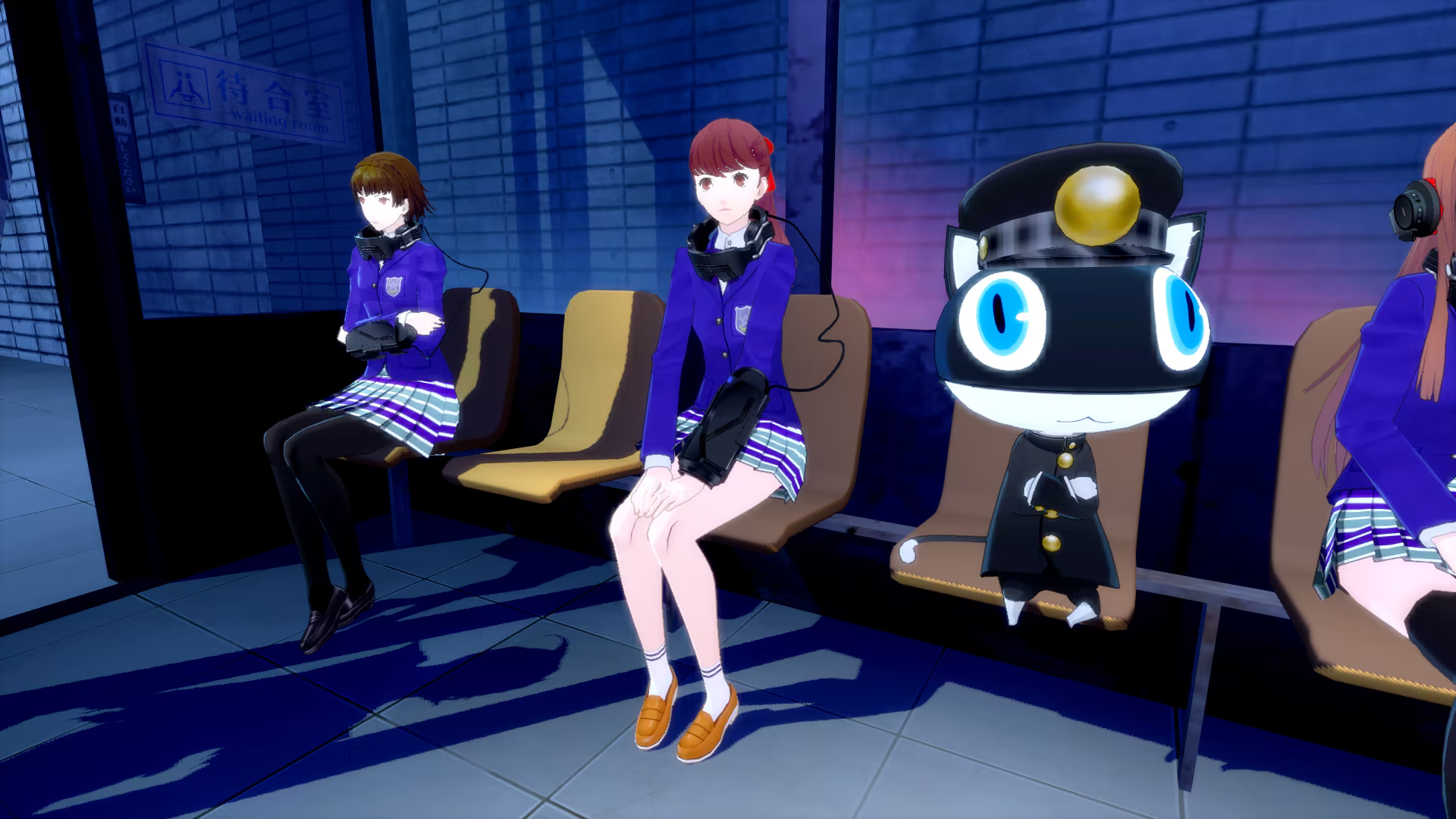
Something that I also noticed during my playthrough were the character design templates during conversations were also updated which looked way better than the original. The music featured new songs which were great, especially the one that plays in the Jazz Club, but admittedly a lot of the ones used during combat was actually replaced by the music that’s attached to the special costumes (that were initially paid DLC) so I had Joker wear the Strange Journey outfit, Makoto wear the Shin Megami Tensei IV outfit, Ann wear the Catherine outfit, Yusuke wear the Revelations: Persona outfit, Ryuji wear the Shin Megami Tensei if outfit, Haru wear the Velvet Room outfit and Futaba wear the Dancing on Starlight outfit.
So there were a lot of additions that Persona 5 Royal has added which worked pretty well with the game. Now let’s talk without giving way too much on the new storyline, aka the third semester. This was actually shorter than what you would call a semester, but it added a whole new layer to the themes of the game. It was a very interesting take that just felt weirdly placed in the storyline. To put this into perspective, we had a solid conclusion and then a very long continuation which was great but it just felt jarring somehow. The new palace looked amazing and the final boss was a surprise challenge which I figured was the case after I was levelling up pretty damn fast in the dungeons. I just think that they haven’t figured out how to position it without ruining the pacing and what we got was an interesting but weird conclusion to the story.
A misstep with Persona 5 Royal were also the new cutscenes. I like their inclusion but the quality was not on the same level as the base game. The original was done by studios Production I.G and Domerica, the latter known for their adaptations of Gnosia and The World Ends With You, and the new Persona 5 Royal footage was mostly done by Domerica with studio MAPPA in some parts. I was also let down by the new storyline having a lot of moments where I felt they should have had voiced dialogue especially considering the base game did.
Other than that, Persona 5 Royal was still the definitive way to play the game and even though I had mixed-to-positive thoughts on the new semester storyline, you can still unlock the original ending if you prefer to end the playthrough that way and New Game+ is available if you want to max out your confidants faster like in the original version. The trophies for Persona 5 Royal were much easier and you can get the Platinum trophy without worry but you will need to reach the new storyline which is missable if you don’t focus on the Social Ranks for Akechi, Kasumi and Maruki in advance.
My playtime for Persona 5 Royal ended at 94 hours 15 minutes with a single playthrough (83 hours was around the point where I started the new storyline), in comparison to the original which funny enough was at 94 hours 10 minutes (plus I went through another playthrough to get the remainder of the trophies which brought the total playtime to 144 hours 28 minutes). The gameplay changes made the game faster to finish the original story from the looks of it surprisingly!
Persona 5 Royal is available across different platforms (initially was PlayStation 4 exclusive) but the PlayStation 5 version was pretty solid and I think the Switch version has some ups and downs, but if Atlus does decide to bring it over to Nintendo Switch 2 then I would highly recommend you go for that if you want the best of both performance and portability.

Catherine Classic
Continuing the Atlus train is a puzzle game that had been on my backlog since May 2017, that’s almost 8-9 years ago. Catherine was an intriguing game for Atlus because it’s not their usual RPG style combat but still maintains the sinister dark tone that they are known for. It is a story about a man stuck in a dilemma dealing with having to choose between his girlfriend Katherine or a girl he randomly sleeps with called Catherine, whilst at the same time also experiencing nightmares that required him to move forward otherwise he will die in reality, and it was a pretty solid time.
Before going over the gameplay I want to talk about its presentation. This game was developed by the same trio who worked on the Persona 3, 4 & 5 games with director Katsura Hashino, character designer Shigenori Soejima, and music composer Shoji Meguro, and it was made before they eventually made Persona 5. While it doesn’t use the same engine as Persona 5, it did feel like the ideas and aesthetic in its gameplay and presentation especially in the bar carried over into their next game.
The character designs I loved and the voice-work were pretty solid as well with some well-known actors in the English cast and most of them have done work on other Atlus games – Troy Baker (Kanji in Persona 4) as Vincent, Laura Bailey (Rise in Persona 4) as Catherine, Michelle Ruff (Kawakami in Persona 5) as Katherine, Liam O’Brien (Akihiko in Persona 3) as Orlando, Yuri Lowenthal (Yosuke in Persona 4) as Toby, and Erin Fitzgerald (Chie in Persona 4 Golden) as Erica. As this was the original localised version that I’ve been playing, also known now as Catherine Classic, the Japanese audio track was not available unless you have the PC version but Atlus dubs are really good quality so that makes up for it.

The gameplay was split into two portions; the interactions you have at the bar and the tower puzzles. In the bar, you can speak to people and sometimes choices will appear and whatever choice you decide to choose can impact their fate later down the line. There’s also a morality meter of sorts, one based on freedom or order, and this meter will impact what ending you wish to choose. The heroine of choice is mainly decided in the final act, but everything before that does impact whether you achieve a good ending, a neutral ending or a bad ending. As I want to a nice person, I always chose the options that felt like it would be supportive of other characters whilst also not being an asshole to one of the heroines, therefore I ended up with the Good Ending for one of the characters I was rooting for. So it’s similar to a visual novel, but with gameplay!
In the bar, you can also choose to drink which will influence the tower puzzles and there’s a mini-game you can play that provided tons of mini-puzzles that are in the same style as the main tower puzzles. I played a few of the stages but there’s hundreds so I didn’t spend too much time on it.
Now let’s talk about the core aspect of Catherine and that’s the tower puzzles. The aim is to reach the top of the tower blocks before you fall to your death or die horribly whether its by being crushed by blocks or a spike got to you out of nowhere. Catherine Classic was known for its pretty steep difficulty and it shows – this game does not mess around and every move you make does impact how you proceed to the end goal of the puzzle. I have died hundreds of time and in many cases it’s pretty funny and frustrating at the same time, because in most of them it’s my own fault. But the game is smart to where you can make your way through to the end thanks to the different combinations and techniques that it teaches you to help you progress and they’re all really useful and worth paying attention towards.
In these tower puzzles, also known as nightmares, you will see a lot of sheep around. They just want to reach the top of the tower as much as you do, so you may end up in scenarios where you just decide to shove them out of the way or they may want to kill you for the sake of it. The puzzles can do that to people sometimes.
The gameplay of the tower puzzles I was unsure about and was why I never bothered to play it in the first place. But as soon as I started the game and listened to the rules they teach you about how to proceed, it immediately clicked with me and I ended up loving the gameplay entirely. The way it works is that you can move blocks to create a path up the tower, you can re-position them to be forward, backward and in a spot where it can stay hanging on the edge to be able to create different combinations that will allow you to proceed even further. You can also hang on the edge of these blocks and move to the other side if you can’t climb any higher, but only if they were available on the same row. If you are in a position where you can’t climb any further but have tons of blocks higher up, you can move them out of the way to bring the tower down a row, but you want to be careful as it could lead to an impossible situation, especially when the blocks at the bottom will eventually fall and disappear.
In addition to regular blocks, you also have different variations to make the gameplay even challenging. These include an ice block which makes you slide to the next regular block (and if there isn’t one in your row, you will fall off and die), a spike block where if you don’t move fast enough you will die instantly, a dark block which is heavy but can still be moved around, a trampoline block which lets you move to higher ground, a randomiser block, and a black hole block which will kill you (and even a block) if you step on it.
As much I have enjoyed the puzzles, Catherine Classic does have some pretty nasty flaws. The controls for when you are hanging was pretty painful at times as the game decides to shift the controls perspective especially when you are moving around from behind the blocks. This was technically fixed in the game’s remake Catherine Full Body thanks to the camera being able to see the blocks from the other side of the tower. Another flaw was the difficulty which was great but you do have to restart the whole stage unless you reach the checkpoints but even so the game does borrow the classic ‘you have x amount of lives before game over’. Now again, the difficulty has been addressed in Catherine Full Body as well, replacing the lives system with you going back a step (which is like this version’s Undo feature). The pillows in this game do give you two lives and if you have a level where the pillow was next to you, you could easily grind the lives to make progress more accessible in your playthrough.
When you finish the game you also have two additional game modes available; Babel and Coliseum. Babel offers additional stages for you to go at, but I was unable to play this because it asks for you to earn Gold Ranks during the story mode which was not particularly easy to achieve. Coliseum mode is a co-op type game where you can go up against another player on the tower.
My playthrough for Catherine took me 14 hours 45 minutes to finish the game, and I managed to get some trophies along the way which was in Japanese for some weird reason. I also don’t recommend going for the Platinum because this is one of the hardest to complete from its time due to asking to go after every ending and beat all of the challenges.
But overall, Catherine was a surprisingly fun puzzle game with a solid story and great presentation. The classic version is solid but does have its challenges so I would say going for Catherine Full Body is more ideal as it offers some improvements plus has more content including a playable Joker from Persona 5.

Clair Obscur: Expedition 33
When I first saw this game at the Xbox showcase, I was immediately intrigued by its visual style and the fact they went with a turn-based system which to me was rather uncommon outside of a couple well-known franchises from Japan and how a majority of games are more action driven. Since then I have kept my interest in the game but avoided all of the trailers and when the reviews came out, I immediately made the decision to pick it up at launch especially considering the price was £40 for this quality experience.
Clair Obscur: Expedition 33 was developed by Sandfall Interactive, a French studio founded by a few former Ubisoft developers with a majority of newcomers to the video game industry. To me, the end product displayed so much passion and love put into this project from the content to the story-telling and presentation. Considering they were inspired by Japanese RPGs, one of which was confirmed to be Lost Odyssey, I say they have done an amazing job honouring the genre and it’s so good that I cannot wait to see what they have in store next.
The story was about a group of expeditioners who are on a mission to traverse through a fractured world to stop the paintress, a being who is threatening the fate of humanity. And that is all you need to know because there’s a lot going on with its story and I highly recommend going through with as little information as possible. What also supports the story has been the cast of characters and the performances which were really solid. We have Charlie Cox (Daredevil), Ben Starr (Final Fantasy XVI), Andy Serkis (The Lord of the Rings), Jennifer English (Baldur’s Gate III) and more and they all did such a great job.
As mentioned, this is a turn-based RPG so when you go into combat you have to take turns. This game takes the system and adds more variety to make it accessible for those who prefer the action style gameplay. For example, you can shoot your opponents to knock their shield points down and also apply a mark to add critical damage to them on the next turn. When you use an ability, a quick-time event will appear which upon succession will add extra damage to the opponents and they’re very easy to manage. Each ability uses AP points which refill when you use a regular attack or the start of a battle, which I should mention is what makes this game really good for pacing as it avoids the challenge (or tediousness) of other JRPGs where in those games you need MP but can easily run out during your travels unless you find a save point or have items.
When the enemy takes their turn, this is what makes this game stand out from others because you can in theory go through the entire playthrough without taking any damage due to the dodge and parry mechanics. You can choose to dodge an enemy attack, or take the ‘high risk, high reward’ approach of parrying which upon a couple successful hits can deal massive damage against your opponents which was very rewarding and necessary if you want to progress through many of the game’s tough fights. Dodging was still fine but you may end up taking a lot longer defeating opponents in battles.
You can also customise your characters with various features. You can change their hairstyle and costumes which can be unlocked throughout your journey, whether its an item, buying them from a merchant, or defeating a specific boss fight or challenge. You can also use Lumina for increasing your Pictos abilities. Pictos is where you can apply an ability to a character and if you manage to fully maximise its capability, other team-members can also use them at the same time. These abilities use up points, whether its 5, 10, 3, or 20 etc and the stronger the Pictos the higher the cost. There’s tons available, including regaining HP/AP if you successfully dodge or parry, deal double damage but also take damage, a chance to immediately revive if you lose your HP during a fight and start the battle with tons of AP so you can immediately have access to higher cost abilities from the start. There’s dozens of customisation available and you can build your party with as much freedom as possible.
You can also level up your character’s stats based on Health, Damage, Speed, Critical Rate and Defence. I focused on Health, Damage and Defence but you will have opportunities where one skill stat may also build others which is handy. If you’re not happy with your current build you can reset the stats with an item and I had dozens of that throughout my playthrough so there’s room to make changes if needed.
Because of spoiler reasons I won’t go over which characters I have kept using during my progress, but each of them were really cool and are all equal in terms of their capabilities in battle, so you won’t feel dissatisfied if you are forced to use specific characters. If you are struggling with the difficulty, you can tone it down to Story focused if needed or keep Lune in your party for HP support. I have played through the whole game on Normal difficulty and while I have encountered a lot of tough battles, mostly from Chromium enemies who are more like post-game bosses, I felt that a vast majority of the defeats came from me not learning the right moment to parry so I kept going until I nailed it and eventually defeated them. There will be enemies that have tons of health so for those I hold off until I have better stats but in a lot of cases I am able to win the battle which rewards you with new weapons, pictos and costumes which is cool.
The game’s world design was amazing to explore. There were various areas with different themes to them and their own type of enemies, but the world map has this Fantasian style to it and you can walk around the place. You can also setup a camp to rest your team for a bit if needed and the game does warn you if an optional area is too dangerous for you to encounter which was good for making sure you don’t get caught up by a surprise super-hard boss at a lower level.
The music was also really good. It’s pretty much NieR level of quality and what’s really surprising is that this is the first time the composer has worked on a major project given their previous music pieces were through SoundCloud and forums. Every music track nailed the tone, with songs providing a mixture of sad, happy and jazzy tunes to them. The music that plays during the world map was also one of my favourites.
In terms of criticisms, the cutscenes were rather low quality in certain portions which may be due to how they optimised them to keep the file size down, or due to focusing on performance over quality. The final act of the game can make you super overpowered if you decide to deviate from the story early on so I recommend you focus on the story and then enjoy the post-game content afterwards because there’s tons of very interesting lore throughout the game.
The game does have collectibles which are these journals that explain more about what has happened to the world prior to your current expedition team, and there’s also extra areas that offer additional story which was rewarding and offered some pretty cool boss fights. The trophies in this game were well done and there are some missable ones in the prologue (fighting a Mine and grabbing a key that unlocks a gate later down the line) but everything else can be obtained without issue and I managed to get the Platinum trophy which wasn’t exactly an easy feat considering there are some pretty challenging boss fights. I spent 49 hours 27 minutes going for a 100% base game completion in its entirety and I loved every moment of it, it was pretty much the same feeling I had with Final Fantasy VII Rebirth but half the time needed.
So yes, I do highly recommend the game and I’m glad that it managed to win various awards because its such an achievement for a small studio to create and to me, sends a message to the gaming industry that you can create high quality games for low prices and with no interference from those who just want big massive live service projects.

Mario Kart World
The Nintendo Switch 2 finally arrived and of course like many others who picked up the console I also went for the bundle because it was much cheaper than its physical counterpart. Now this completion is a bit different to the other games in my gaming completion list because technically speaking this game isn’t 100% done, but I’m at a point where I felt I’ve done as much as I can with the options and time available. I also haven’t played the game since its updates post-launch so my thoughts on the game are based on the launch release.
Mario Kart World is the latest iteration in the racing franchise and I’ve played about under half of the games released, primarily Mario Kart 64, Mario Kart DS and Mario Kart Wii and bits of Super Mario Kart and Mario Kart: Double Dash. The one that I’ve spent the most hours was definitely the DS version as it was at the time the killer-app of sorts for the DS platform. And while I own Mario Kart 8 Deluxe on Switch, I haven’t properly played it so this is technically a jump from Wii to Switch 2 for me and it’s an interesting experience for the most part.
Mario Kart World changed the formula up by going with a world setting similar to Burnout Paradise in a way and the Grand Prix starts off with the traditional three-lap formula before having every other map switch it up to a Point A to B approach which is both a benefit and a detriment to the game. It’s good to introduce a new style to racing these tracks but at the same time it also felt a bit too padded and over stayed its welcome as I played through them. It’s also very spacious so the tracks aren’t as busy especially when you’re so far ahead in first place. This would work for online multiplayer where you’re playing against dozens of people but it does feel like single player was an afterthought here.
That said the race tracks themselves despite the Point A to B approach all look great, but I hate the water levels as they’re not particularly fun to playthrough. The graphics look great and the gameplay is pretty easy to jump back on. The addition of the Knockout mode is a great idea and this does somewhat work much better with the Point A to B format but it would be nice if the game provided an option to switch back to the traditional three-lap approach. It’s okay to change things up but if it ain’t broken don’t fix or change it and I think that’s what’s happened here. I suppose the general point is stick to Mario Kart 8 Deluxe or the older games if you want the traditional style and stick to Mario Kart World if you want something completely different.
Switching up the negatively, I did play through various characters and they’re all pretty fun to control as well as the various vehicles in both car and bike formats. The jump mechanic was pretty fun and rewarding hopping around parts of the wall and I loved how you can unlock more characters and costumes as you progress through the game especially with the Yoshi drive-throughs. The game offers a Free Roam area and that has its own challenges and such but I didn’t find much motivation to commit a lot of time for it.
Now for added context, I don’t have Nintendo Switch Online so I can’t play the online multiplayer and why I haven’t bought it was because I am primarily focusing on a large backlog of single player games, especially on PlayStation, and I don’t want to commit to another subscription service just yet if I’m not going to use it much.
Overall I do think Mario Kart World was a well-designed game but it does take a step back on removing the traditional lap racing in favour of the newer ones (though you can race them in time trials but that’s not fun at all). Many have said the game isn’t worth the £74.99 ($79.99) price point and I do agree on that for now. If Nintendo decided to offer free expansions throughout the course of the new console generation then I may say yes, but my advice would be to wait for a sale. As I went with the bundle, that will eventually discontinue or has discontinued so do go for that if its around.

Nioh 3 Alpha Demo
With the surprise reveal at the PlayStation State of Play, I wanted to take the opportunity to check out the Alpha demo release for Nioh 3 and beat it before the demo expired. I am a big fan of the first two games and while I didn’t go for the DLC expansions due to the high difficulty requirement, I was happy to check out any new instalments when they come along.
Nioh 3 changed up the gameplay with a few key differences. You now have control over two class types; a samurai and a ninja, which introduced some interesting combos and dynamics during your journey throughout the world of Nioh. The other big change was the level design is now open-world or essentially one massive area to explore which gives you freedom to explore, check out various mini-bosses and even some side quests to help unlock more items to improve your build.
I had a go with various weapons as I progressed but I settled on the usual samurai sword and any of the ninja weapons as they were pretty cool to use. The ninja class was great for getting yourself out of some pretty nasty situations while the samurai class was there to deal the big damage against the demons. You can also parry against the red glowing enemies which automatically changes to the other class which is pretty neat (in Nioh 2 successful parries starts the Oni form). You can use talismans, summon enemies or call for allies to help with the boss battles.
The boss battles themselves were pretty fun and took a while to get used to their moves and surpass them. One of the toughest fights that I had to deal with was due to bad spawn placement and that’s the Bloodedge Demon who spawns by defeating various people (other players who died due to being defeated by an enemy or boss) who you can summon to defeat throughout the game. This boss was a pain but more painful when you need to clear out the enemies around it because they’ll get in the way, and one enemy in particular is a leech that just won’t go away. The leech enemies have too much health and can deal a lot of damage.
In terms of progression I managed to finish the story chapter for the game and was quite the achievement. The demo took me about 8 hours to complete it and that’s a lot of content for an alpha demo. The framerate was not perfect but I expect they’ll fix this in the final build. Overall I was really happy with the demo and look forward to playing the final version when it releases next year. This demo for clarity was a limited-time only and delisted on 19th June.
And that concludes Part 1 of my list of video games I played throughout the year of 2025. You can view the rest of the list here!
Leave a Reply